ECCV 2026 Workshop

2nd Workshop on
Benchmarking Evidence‑Aligned
Multimodal Reasoning

Moving beyond accuracy-only evaluation — verifying that multimodal predictions are supported by correct perceptual signals.

Half-Day Workshop — 4 Hours
09:00 – 13:00
ECCV 2026

Workshop Overview

Multimodal foundation models now achieve strong performance on audio-visual QA, vision–language, and video understanding benchmarks, yet accuracy can hide shortcut reasoning. Models may answer correctly by relying on linguistic priors or spurious correlations rather than attending to the visual regions, frames, or audio events that provide the true evidence.

Most existing benchmarks score only the final answer, offering limited insight into whether a model actually "saw" or "heard" what it needed. BEAM 2 centers on evidence-aligned multimodal reasoning: datasets, protocols, and metrics that jointly evaluate (i) answer correctness and (ii) perceptual grounding of the reasoning process.

We emphasize evaluation designs with verifiable anchors — bounding boxes, representative frames, temporal segments, and audio-event timestamps — and model outputs that include structured evidence references and short grounded rationales.

3 Invited Talks
4h Half-Day Program

Evidence Alignment

Verifying that predictions are supported by the correct perceptual signals — not linguistic shortcuts.

Perceptual Grounding

Linking multimodal reasoning to concrete audio-visual cues with interpretable anchors.

Composite Metrics

Jointly scoring answer correctness and grounding quality beyond accuracy-only reporting.

Community Standards

Establishing standardized, interpretable metrics for the next generation of trustworthy multimodal systems.

Topics of Interest

BEAM 2 welcomes contributions spanning methodology, empirical analysis, and systems-level advances in evidence-aligned multimodal evaluation.

01

Reasoning-Aware Benchmarks

Multimodal benchmarks for video, audio, vision–language, and audio-visual QA that go beyond final-answer scoring.

02

Perceptual Grounding & Localization

Spatial, temporal, and audio-event grounding and evidence localization for multimodal reasoning.

03

Explanation Faithfulness

Evaluation of explanation faithfulness and evidence alignment beyond plausibility checks.

04

Composite Metrics

Metrics that jointly score answer correctness and grounding quality (composite or multi-objective).

05

Counterfactual & Perturbation Evaluations

Muting audio, masking regions, or swapping objects/events to probe genuine model understanding.

06

Human Evaluation & Auditing

Human-in-the-loop protocols and auditing tools for interpretable multimodal reasoning and agentic deployment.

07

Bias, Robustness & Fairness

Robustness and fairness in multimodal reasoning across accents, dialects, demographics, and domain shift.

08

Benchmark Governance

Documentation, licensing, privacy-preserving releases, and responsible leaderboards.

Workshop Schedule

A half-day (4-hour) program with invited talks, oral presentations, a poster session, and a closing panel.

09:00 – 09:10
Opening

Opening Remarks

From accuracy to evidence alignment

09:10 – 09:35
Invited Talk 1 ✓ Confirmed

Dacheng Tao

Nanyang Technological University

09:35 – 09:55
Oral Session 1

2 Contributed Papers

10:20 – 10:50
Break

Poster Session & Coffee

10:50 – 11:15
Invited Talk 2 ✓ Confirmed

Aditya Grover

UCLA / Inception

11:15 – 11:35
Oral Session 2

2 Contributed Papers

11:35 – 12:00
Invited Talk 3 ✓ Confirmed

Rajeev Rikhye

Google DeepMind

12:00 – 12:20
Spotlight

Invited Paper from Main Conference

12:20 – 12:50
Panel

"How do we evaluate multimodal reasoning we can trust?"

12:50 – 13:00
Closing

Closing Remarks & Shared-Task Updates

Invited Speakers

Dacheng Tao
✓ Confirmed

Dacheng Tao

Distinguished University Professor

Nanyang Technological University

Applies statistics and mathematics to AI and data science with 200+ publications and multiple best paper and test-of-time awards. Fellow of the Australian Academy of Science, AAAS, ACM, and IEEE.

Aditya Grover
✓ Confirmed

Aditya Grover

Assistant Professor

UCLA & CTO, Inception

Leads the MINT group at UCLA, focusing on generative models and reinforcement learning for scientific discovery. Previously at Meta FAIR and UC Berkeley. PhD from Stanford.

Rajeev Rikhye
✓ Confirmed

Rajeev Rikhye

Staff Researcher

Google DeepMind

Works on improving the factuality and freshness of Gemini, Google's large language models. Previously developed dermatology experiences for Google Lens in Google Research's Health AI team. PhD in Systems Neuroscience from MIT.

Organizing Committee

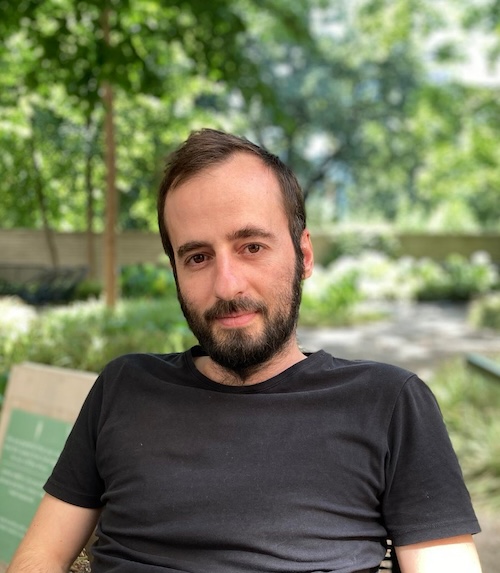
A team spanning Carnegie Mellon University, Amazon AGI, Google, and Adobe, combining academic and industrial expertise in computer vision, multimodal learning, and large-scale evaluation.

Carnegie Mellon University

Laszlo A. Jeni

Laszlo A. Jeni

Assistant Professor

Carnegie Mellon University

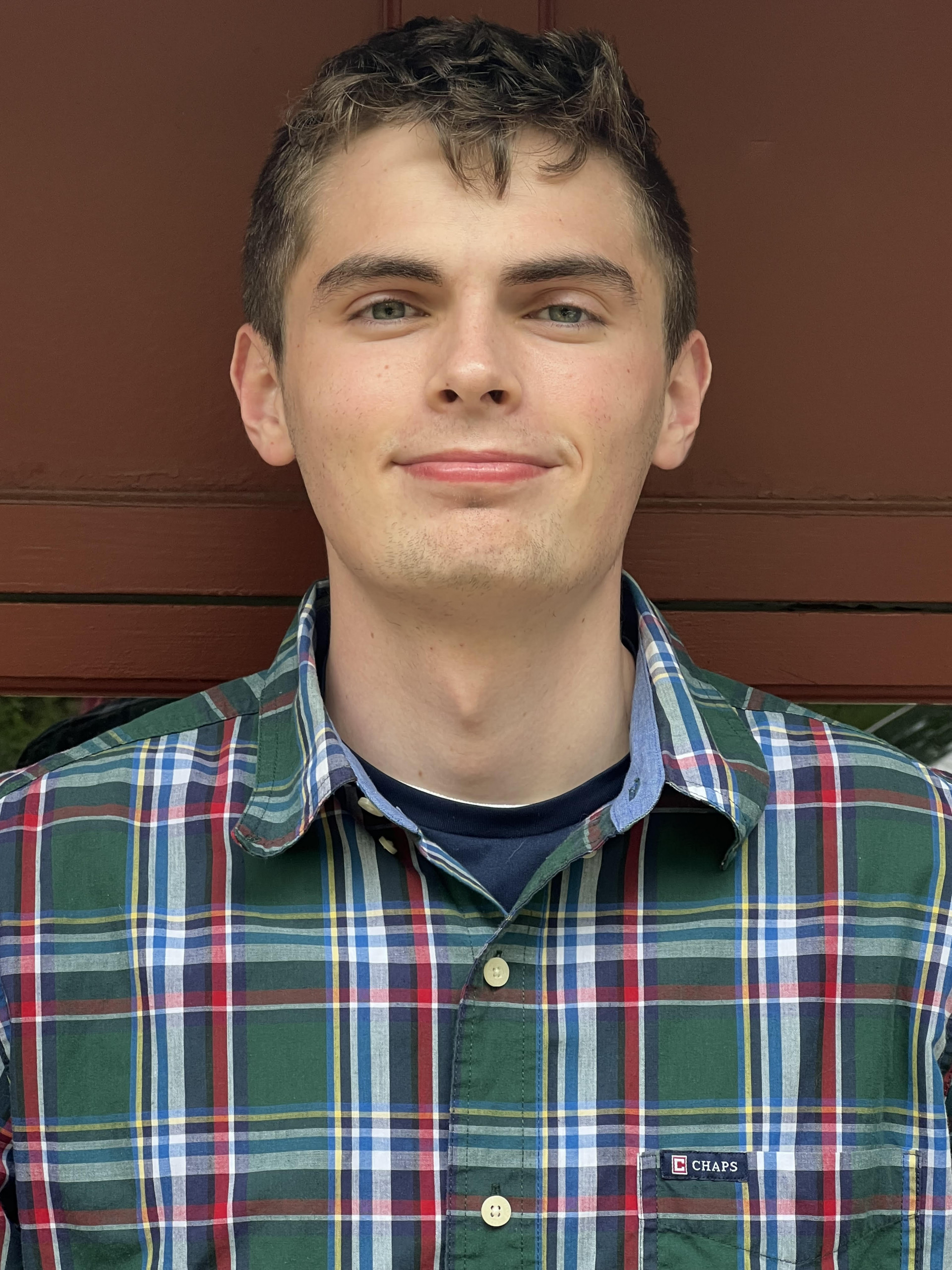
Joel Julin

Joel Julin

PhD Student

Carnegie Mellon University

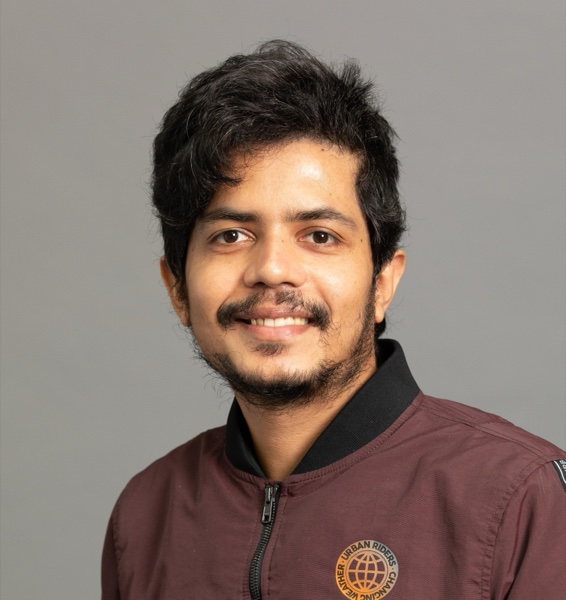
Souraja Kundu

Souraja Kundu

PhD Student

Carnegie Mellon University

Liza Dahiya

Liza Dahiya

MS Student

Carnegie Mellon University

Ananya Bal

Ananya Bal

PhD Student

Carnegie Mellon University

Amazon AGI

Louise Xie

Louise Xie

Applied Scientist

Amazon AGI

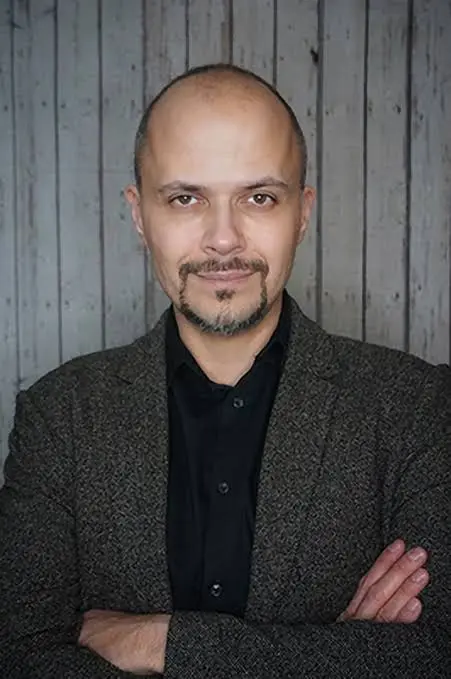
Davide Modolo

Davide Modolo

Senior Manager

Amazon AGI

Google

Xu Zhang

Xu Zhang

Staff Research Scientist

Google DeepMind

Hao Yang

Hao Yang

Senior Staff Engineer

Google

Ashwin Swaminathan

Ashwin Swaminathan

Director

Google

Adobe

Jingru Yi

Jingru Yi

Senior Applied Scientist

Adobe Firefly

Submit Your Work

We welcome original papers, position statements, and benchmark reports aligned with the workshop themes.

Paper Format

Submissions should follow ECCV formatting guidelines and be no longer than 8 pages excluding references.

Important Dates

  • Submission Opens May 31, 2026
  • Paper Deadline Jul 31, 2026
  • Notification Aug 7, 2026
  • Camera Ready Aug 13, 2026
  • Workshop Date ECCV 2026

Contact

Questions about submissions or the workshop program:

laszlojeni@cmu.edu